
We are analyzing 28,000 Science Fiction novels for futures research
Using methods from the Digital Humanities we annotate science fiction novels in German language with the help of a taxonomy to extract and detect technological, societal, economical and political trends. The results will be made available to interested parties through a dashboard.
Background
Science Fiction as an archive of possible futures
The narrative format of science fiction literature plays a vital role in the social construction of reality, enabling human knowledge and creative potential to be readily communicated even in complex contexts. Grounded in physical laws and scientific principles, the genre factors in cause-and-effect relationships, allowing it to drive innovation processes that extend well beyond purely hypothetical future forecasts. Having historically inspired numerous real-world concepts and inventions, science fiction not only sparks ideas for novel products and services, but also provides critical insights into prospective user groups as well as the potential risks and conflicts tied to emerging developments. Science fiction can be viewed as a comprehensive archive of future ideas, offering potential for inventions and solutions to present-day challenges. On this basis, “Science Fiction Thinking” can be regarded as a future skill to translate information into potential strategic actions. Companies and organizations are increasingly adopting this mindset to bolster their future readiness and generate ideas for innovation and transformation processes. However, synthesizing approaches and methodologies are still lacking to make insights from science fiction literature accessible to a broader audience and to integrate them systematically into strategic processes.
FOREXSCIFI addresses precisely this challenge. Using a custom-developed taxonomy, LLMs, and digital humanities methods, 28,000 German-language science fiction novels are being annotated to extract trends and future ideas, which are then compiled into a dictionary. This will result in an interactive dashboard available to all interested parties for both insight and inspiration.
Core Questions

- How can we systematically extract technological, social and political visions of the future from science fiction and analyse them quantitatively?
- To what extent have ideas from earlier science fiction gained traction in science, patents, standards and policy, and what does this tell us about the plausibility of newer scenarios?
- How can policymakers, public administrations, researchers and businesses use these visions for foresight and innovation impact assessment?
Technical Approach
From raw extract to an annotatable corpus
German National Library (DNB) · German-language science fiction · September 2026
Records removed or under review
- Audiobooks and periodicals−5,789
- Duplicate catalogue records−8,316
- Editions and series volumes−13,746
- Still under reviewApprox. −11,000
Review process
- Manual screening · In progressGenre and format check for each title
- Agent-based reviewAutomated recheck of excluded records
- Cross-checkSecond check of the agent’s findings
- Final science fiction datasetCurated, verified and ready to annotate
Anchor corpus for manual annotation
- 43DiversityCurated list covering dimensions of diversity
- 53BestsellersCurated list based on sales and awards
- 50Random sampleStratified and reproducible using SHA-256
First pipeline: Summarisation
From digitised works to a corpus of summaries
- Full textDigitised work from the DNB collection
- Sections8,000 characters, split at sentence boundaries
- CondensingA local language model processes sections in order and carries context forward
- SummaryAbout one fifth of the source length, in new wording
- CorpusAround 28,000 works for analysis
Second pipeline: Annotation
The same schema applies to every summary
- Corpus of summaries28,000 summaries from Pipeline 1, one per work
- One summaryThe summary contains the passages that support the annotations
- TaxonomyThe model selects values from the controlled vocabulary and links each one to a supporting passage
- All annotationsTopic profiles, time series and patterns in motifs across the corpus
Interface
The interface lets users open nodes down to individual records.
How did early science fiction imagine power generation?
Application concepts
3 groups · 7 tagsEnergy sources 4 works- Tidal power plantThe Tunnel · 1913
- Radiant matter1910
- Space energy1922
- Muscle power1911
- Transmission3 works
- Scarcity2 works
- Plausibility5 works
- Evaluation5 works
- Works over time1910–1922
Distribution of concept groups
Works over time
Record
- Work
- The Tunnel · Bernhard Kellermann · 1913
- Field
- Level 2 · future themes
- Value
- Energy
- Tag
- Tidal power plants
- Referentiality
- Scientifically plausible
- Confidence
- High
The reservoirs store water that flows at high tide, driving the turbines that generate electricity.
Publications

Team
Prof. Dr. Markus May
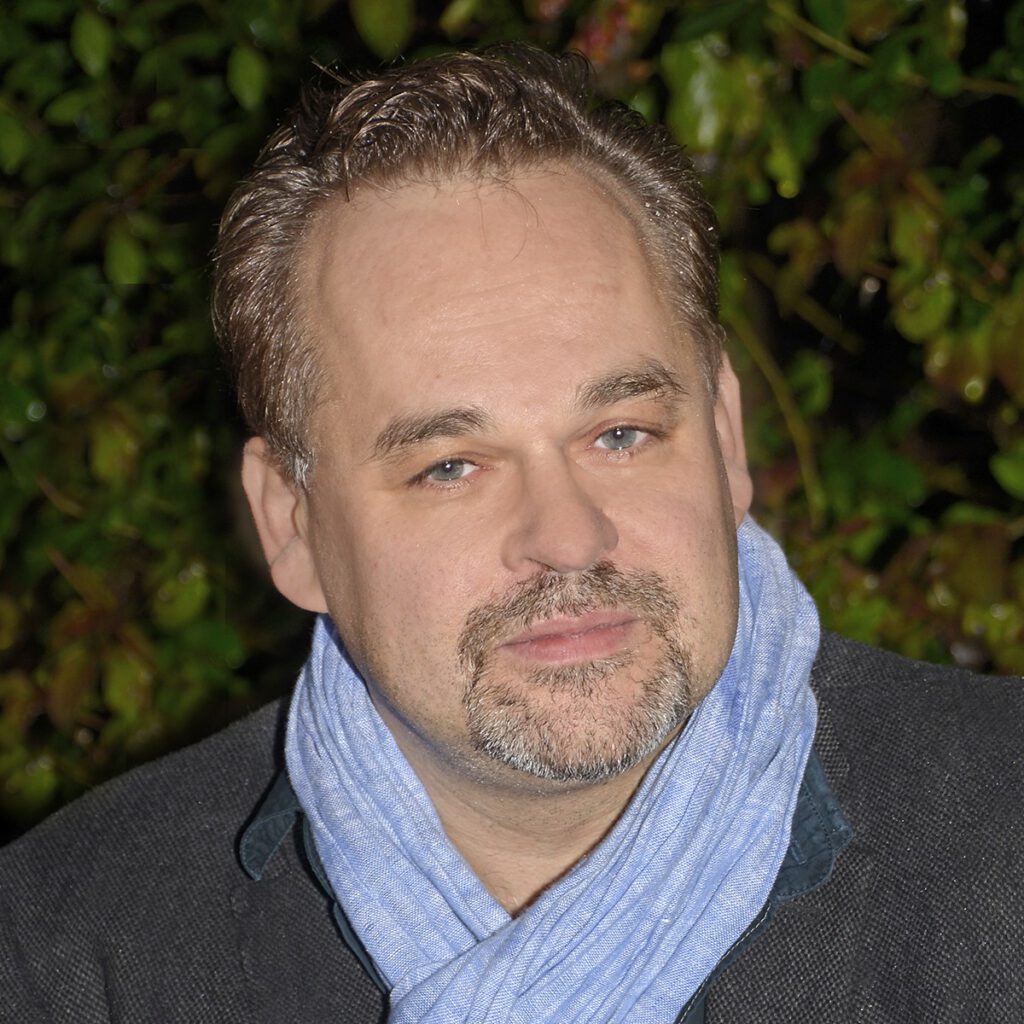
is Professor of Modern German Literature at Ludwig-Maximilians-Universität München. He studied German Studies, English Studies, and Theatre Studies at Friedrich-Alexander-Universität Erlangen-Nürnberg, Trinity College Dublin, and Katholieke Universiteit Leuven. His research focuses on genres of the fantastic (such as horror, science fiction, and fantasy) across their (inter-)medial forms, ranging from literature, film, and television series to graphic novels and video games. He is particularly interested in the impact of fantastic phenomena on everyday culture, as well as issues of productive reception, their economic and ideological implications, and aspects of literary, media, and cultural theory.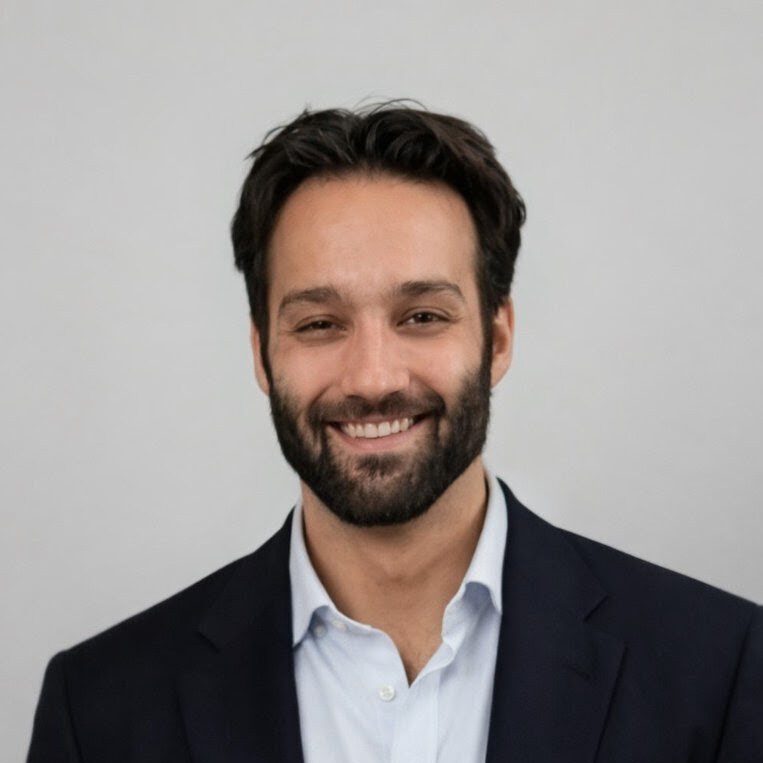
Dr. Can-Elliot Sachs
is a researcher and lecturer at LMU Munich, where his teaching primarily focuses on the digital humanities. He completed his doctorate there in 2025 with the dissertation Anthropozän und Ökologie – Eine transdisziplinäre Analyse der Entwicklung des Umweltbewusstseins in Deutschland (Grade: Summa cum laude, 0.5). The monograph was published open access under the same title by Springer Nature. Together with Prof. Markus May and Dr. Christiane Raabe, he co-edited the volume No Future Now? Dystopien und Apokalypsen(Universitätsverlag Winter, Heidelberg). His research focuses on digital humanities methods and applications, transdisciplinary perspectives on the Anthropocene discourse, and comparative literature on 20th-century fantasy. Previously, he was a Digital Humanities Fellow at the German National Library, where he published the paper “Die Entstehung des Umweltbewusstseins in Deutschland. Eine Metadatenanalyse der Publikationslandschaft der Deutschen Nationalbibliothek.” He attended the EUROPAEUM Winter School on “Planetary Wellbeing” in Barcelona and studied German Studies (M.A.) and Law (Bachelor of Laws) at LMU Munich.
Prof. Dr. Christoph Bläsi
has been Professor of Book Studies at Johannes Gutenberg University Mainz since 2009, specializing in the publishing industry and digital publishing. Following his training as a computational linguist, he previously worked in the publishing sector and at various universities. His current research primarily focuses on AI applications in publishing, economic aspects of educational media, and systematic dimensions of reading research. Another focal point is the textual analysis of genres such as cookbooks and science fiction literature, which he examines using mixed-methods approaches combining close reading, hermeneutics, and computational philology.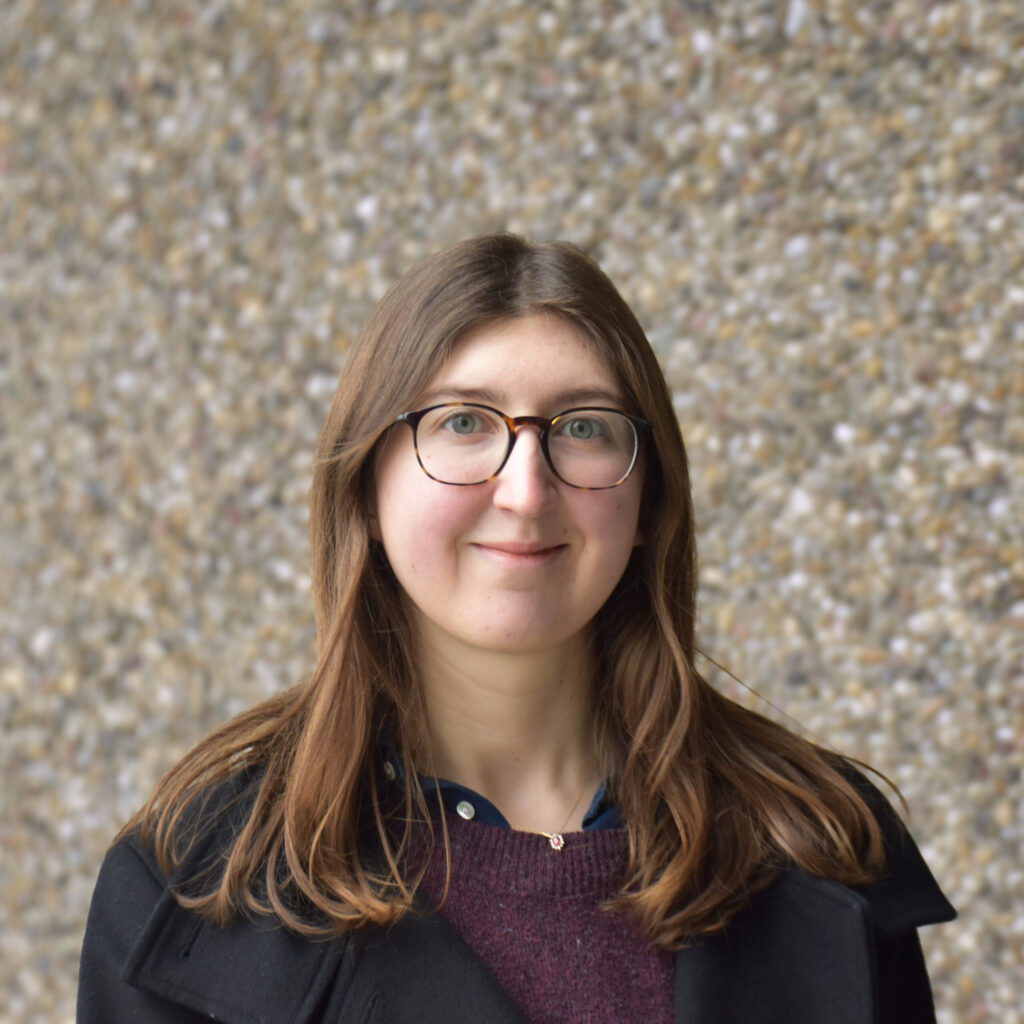
Johanna Mauermann, M.A
has been a research associate on the FOREXSCIFI project since June 2026. She studied Digital Methods in the Humanities and Cultural Studies (M.A., 2026) in Mainz, as well as Comparative Literature and German Studies (B.A., 2023) in Mainz and Geneva. In her master’s thesis, she investigated the use of large language models for identifying and analyzing book reviews in historical newspapers, while her bachelor’s thesis examined the literary portrayal of androids across two novels. Alongside her role at FOREXSCIFI, she currently works at the BMFTR-funded HERMES Data Competence Center at the Leibniz Institute of European History (IEG) in Mainz.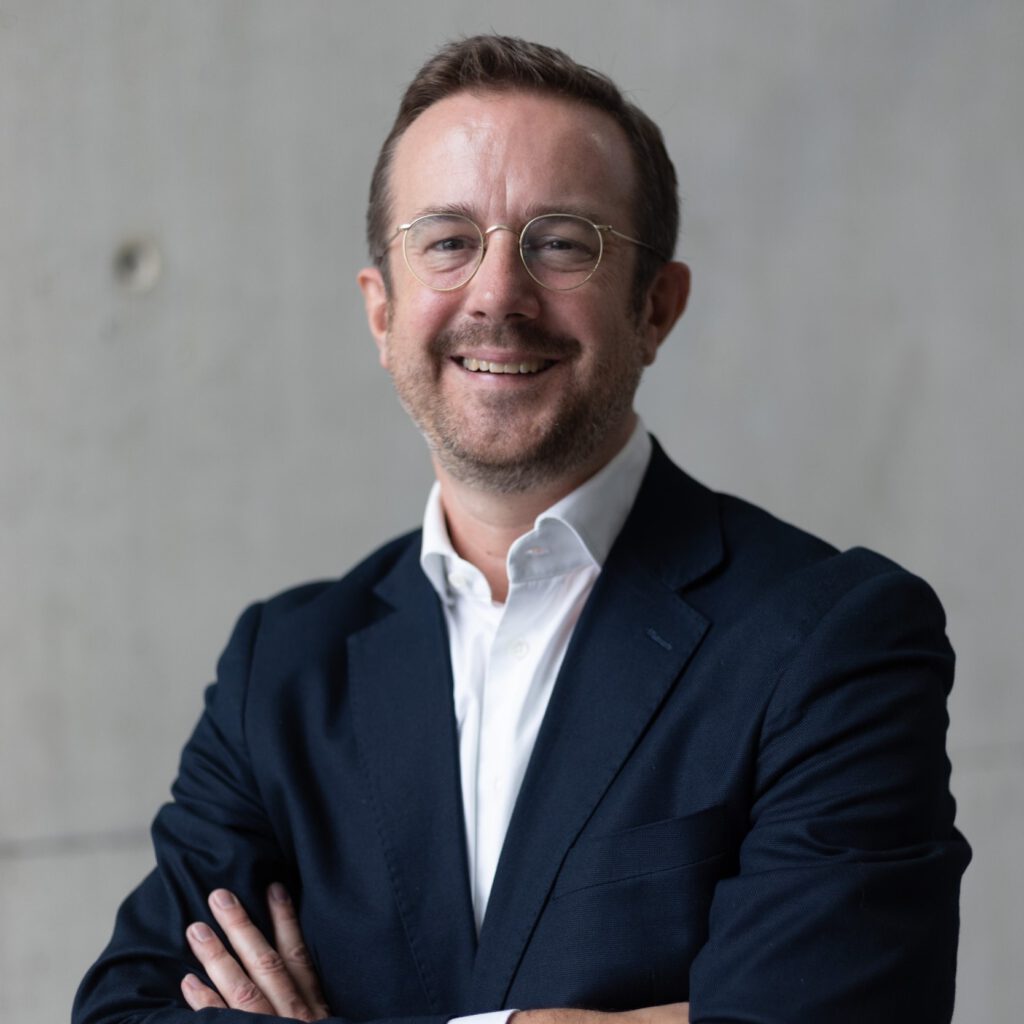
Prof. Dr. Jan Oliver Schwarz
is Professor of Strategic Foresight and Trend Analysis and Head of the Bavarian Foresight Institute at Technische Hochschule Ingolstadt. He studied Economics at Witten/Herdecke University and Futures Studies at Stellenbosch University in South Africa, focusing on the use of contemporary literature for foresight development during his doctoral studies at Berlin University of the Arts. In his work, he connects science fiction with foresight, prototyping, business model innovation, and design thinking, with research exploring the corporate application of science fiction and the deployment of speculative narratives to investigate future domains of life.
Linnet Moxon, M.Sc.
is a research associate at the Bavarian Foresight Institute at Technische Hochschule Ingolstadt. She studied German Linguistics and Computational Linguistics at the University of Stuttgart and wrote her master’s thesis on the application of retrieval-augmented generation for question answering in cybersecurity. Her research interests focus particularly on the impact of language on mental models and cognitive bias, as well as the transfer of scientific knowledge into society.
Stefan Schnell
is a Student Research Assistant in the FOREXSCIFI project a the Bavarian Foresight Institute of Technische Hochschule Ingolstadt. After successfully completing his Bachelor’s degree at THI, he is currently pursuing a Master’s degree in Global Foresight and Technology Management there. Within his academic and practical work he focuses intensively on futures studies methods, technology assessment, and data-driven foresight approaches. Alongside his work on the project, he serves as Chairman of the Board of the Student Investment Club Ingolstadt.Project Partners





Science Fiction Thinking Collective and Scoping Workshop
The Science Fiction Thinking initiative grew out of a collaboration among an interdisciplinary group of researchers led by Prof. Dr. Laura Bechthold. In 2023, the group met for the first time at a Scoping Workshop organised through a VolkswagenStiftung programme to explore how science fiction could be used in futures research. Several questions guided our discussion. How can science fiction literature contribute to futures research? How can ideas from science fiction be put into practice? And what does it mean to develop Science Fiction Thinking as a skill that prepares us for the future? The workshop led to a shared research agenda and ideas for further collaboration.
The Science Fiction Thinking Collective is an informal network of researchers, authors and industry experts. Their shared goal is to explore the theoretical potential of science fiction and put it to practical use in futures research and related fields. The collective is founded on the belief that science fiction offers unique perspectives and creative ways to address present and future challenges. Its working groups cover a range of areas, from theoretical research and creative development to practical applications in industry and society.
FOREXSCIFI is an independent project loosely connected to the Science Fiction Thinking initiative.
Workshop participants
 Laura BechtholdCoordinator and point of contact
Professor of Technology Assessment & Cultural Management at the Bavarian Foresight Institute at THI. Jan Oliver SchwarzProfessor of Strategic Foresight & Trend Analysis at the Bavarian Foresight Institute at THI.
 Markus MayProfessor of Modern German Literature at LMU.
 Christoph BläsiProfessor of Book Studies at JGU.
 Marcus JohnHead of the KATI Lab at Fraunhofer INT.
 Moritz BottsAssistant Professor in the Faculty of Economics and Administrative Sciences at the Turkish-German University in Istanbul.
 Lars SchmeinkFutures Studies Researcher at the Institute of System Architectures in Aeronautics at the German Aerospace Center (DLR).
 Karlheinz SteinmüllerScience fiction author, futures researcher and co-founder of Z_punkt GmbH – The Foresight Company.
 Gerhard SchönhoferAnthropologist and research associate at the Bavarian Foresight Institute.
Reading Recommendations
Books, films, podcasts and essays recommended by the Science Fiction Thinking community.
Science Fiction Stories
Books and Short Stories
- Pantopiaby Theresa Hannig, novel, recommended by Sven Schimpf
- Venomous Lumpsucker(Der Gemeine Lumpfisch) by Ned Beauman, novel, recommended by Klaudia Seibel
- Termination Shockby Neal Stephenson, novel, recommended by Marcus John
- Dark Matter: A Century of Speculative Fiction from the African Diasporaby Sheree R. Thomas, short story collection, recommended by Laura Bechthold
- Adam und Adaby Christian Kellermann, novel, recommended by Karlheinz Steinmüller
Film and Television
- The Creatorby Gareth Edwards, film (2023), recommended by Lars Schmeink
- Extrapolationsseries, recommended by Marcus John
Explore Science Fiction
Books and Podcasts
- Science-Fiction zur Einführungby Isabella Hermann, non-fiction book (2023, Junius Verlag GmbH)
- Das war Morgenpodcast with Isabella Hermann and Andreas Brandhorst
- New Perspectives on Contemporary German Science Fictionby Lars Schmeink and Ingo Cornils, non-fiction book (2022, Springer International Publishing)
- Imaginary Worldspodcast, recommended by Moritz Botts
Science Fiction as an Idea Archive
- Hu.ma.ne AI Pin: Bridging the Gap Between Sci-Fi Fantasy and Modern Realityby Arunav Tiwari, Article (LinkedIn)